Step 1: Customer Action Trigger
A customer performs an activity such as login, purchase, registration, or booking.
01 Aug 2026
Modern businesses rely on instant communication to keep customers informed and improve customer experiences. Transactional SMS allows organizations to send real-time and business-critical messages directly to users through reliable messaging systems.
Unlike marketing messages, transactional SMS focuses on information customers need immediately, such as transaction updates, account alerts, security notifications, payment confirmations, and OTP authentication messages.
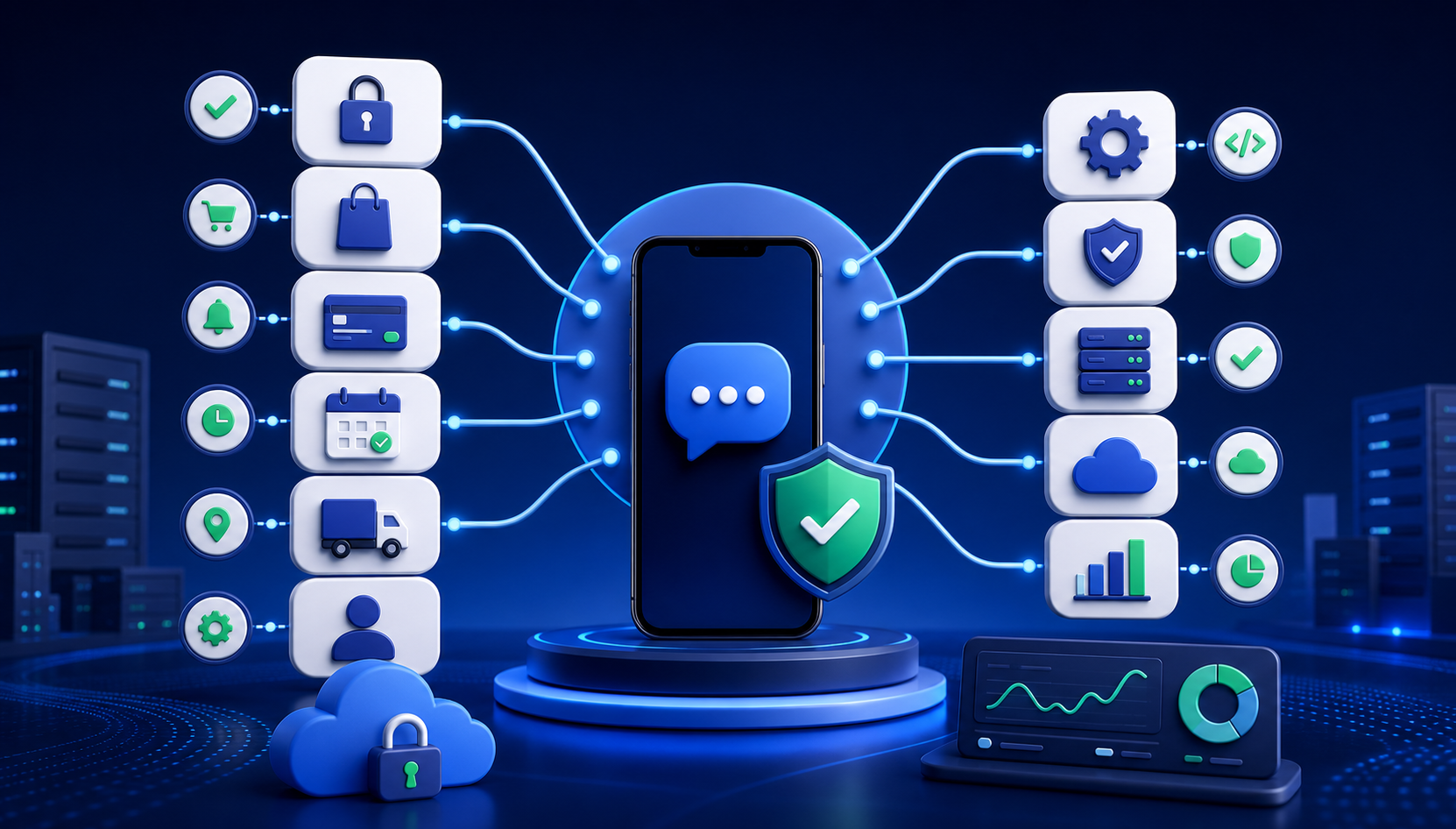
Transactional SMS refers to automated business messages sent to customers for informational purposes rather than promotions. These messages are usually triggered by customer actions, system activities, or business events.
Common examples include:
Transactional messaging helps businesses deliver timely communication while improving customer trust.
Transactional SMS follows a structured communication workflow.
Transactional SMS Process
A customer performs an activity such as login, purchase, registration, or booking.
Business applications automatically detect the activity.
The SMS platform receives message instructions.
The message moves through telecom networks.
The customer receives real-time communication.
Businesses monitor message status and performance.
| Feature | Transactional SMS | Promotional SMS |
|---|---|---|
| Purpose | Customer information | Marketing campaigns |
| Message Type | Critical updates | Offers and promotions |
| Delivery Timing | Immediate | Scheduled |
| Customer Trigger | Yes | Usually no |
| Sending Restrictions | Fewer restrictions | Regulatory limitations |
| Examples | OTPs, alerts | Discounts, campaigns |
Banking and Financial Services
Healthcare
Ecommerce
Education
Travel and Hospitality
Technology and SaaS
Transactional messaging provides immediate communication capabilities that improve customer experiences.
Key Benefits
| Need Reliable Transactional SMS Solutions? Deliver real-time customer updates with secure and scalable transactional messaging services. Button Text: Talk to an Expert |
|---|
Transactional messaging platforms are designed with security and delivery reliability in mind.
Security features commonly included:
Reliable infrastructure improves message delivery success and communication consistency.
Choose a messaging provider that supports secure communication.
Set up business profiles and sender information.
Create message templates for various communication activities.
Connect websites, applications, and CRM systems.
Verify communication flow before deployment.
Track message performance continuously.
Businesses use APIs to automate transactional messaging.
Common API workflow:
Businesses sending transactional SMS in India generally complete DLT registration requirements.
DLT Registration Steps
When selecting a provider, evaluate:
| Pricing Factor | Description |
|---|---|
| Message volume | Higher volumes may reduce costs |
| Geographic coverage | International delivery may vary |
| API usage | Advanced integrations may affect pricing |
| Platform features | Automation and analytics tools |
| Provider infrastructure | Delivery capabilities |
Businesses may encounter:
Recommended strategies
| Ready to Improve Transactional Communication? Build reliable SMS workflows with automation, API integration, and real-time delivery capabilities. Button Text: Get Started Today |
|---|
Explore complete SMS communication solutions designed for customer engagement, automation, messaging workflows, and business communication requirements.
Complete Guide to SMS Marketing for Businesses
Learn how SMS marketing strategies improve customer communication, campaign performance, and customer engagement.
No. Transactional SMS should focus on informational or service-related communication.
Yes. Transactional communication typically supports continuous delivery.
Yes. API integrations can trigger messages automatically.
Businesses sending regulated SMS communication generally complete DLT requirements.
Yes. Businesses can use global messaging platforms for international communication.
Read More: