Protects Sensitive Information
Not all data requires the same level of security. Classification ensures that critical data receives stronger protection such as encryption, access control, and monitoring.
24 May 2026
Data classification is the process of organizing data into categories based on its sensitivity, value, and risk level. It helps businesses identify critical information, apply appropriate security controls, and prevent data breaches.
In today’s digital-first environment, organizations generate massive volumes of data across emails, cloud apps, and endpoints. Without proper classification, businesses lose visibility and control, making sensitive data highly vulnerable to cyber threats, insider risks, and compliance violations.
Data is one of the most valuable assets for modern businesses, but also one of the most exposed.
From customer information and financial records to intellectual property, organizations store and share sensitive data across multiple platforms daily. Without a structured approach to managing this data, it becomes difficult to:
According to industry reports, a large percentage of data breaches occur due to lack of visibility into sensitive data, not just external attacks.
This is why data classification is no longer optional, it’s essential.
Data classification is the process of labeling and organizing data based on its level of sensitivity and importance to the organization.
Common Classification Levels:
By classifying data, organizations can apply the right level of protection to each category.
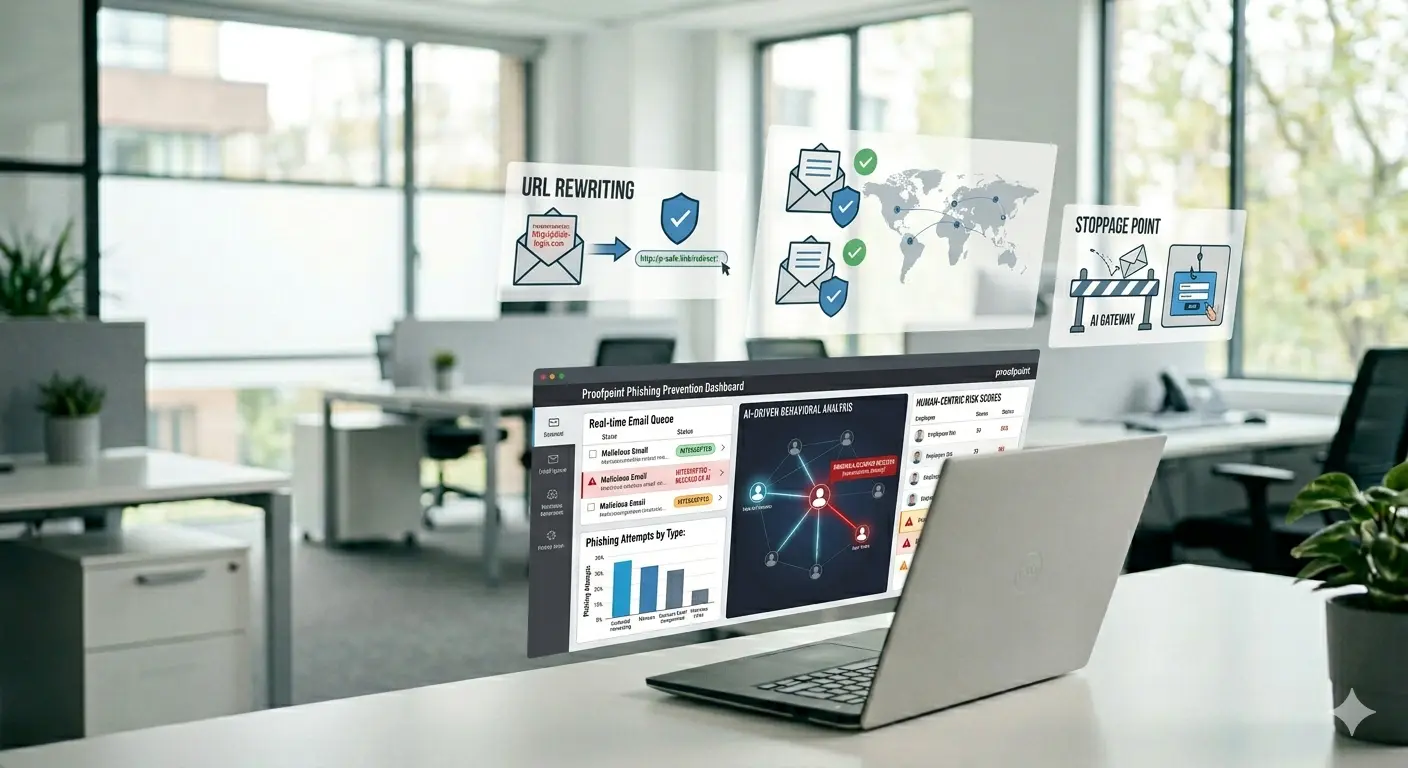
Proofpoint uses a multi-layered anti-phishing architecture:
Not all data requires the same level of security. Classification ensures that critical data receives stronger protection such as encryption, access control, and monitoring.
Unclassified data often leads to accidental exposure. Data classification helps identify sensitive information and prevent unauthorized sharing.
Classification is the foundation of DLP strategies. Without knowing what data is sensitive, DLP tools cannot effectively protect it.
Compliance frameworks like GDPR, HIPAA, and ISO require organizations to identify and protect sensitive data. Classification helps meet these legal requirements.
Organizations gain a clear understanding of:
Employees are one of the biggest security risks. Classification helps monitor and control how sensitive data is accessed and shared.
Organizations that do not classify data face serious challenges:
Example:
An employee accidentally shares a confidential financial document via email because it was not labeled or protected. This results in financial loss and reputational damage.
Modern data classification uses a combination of automation, AI, and policies:
Identify where data exists across email, cloud, and endpoints.
Analyze content to detect sensitive information (PII, financial data, IP).
Assign classification labels automatically or manually.
Apply security controls such as:
Track how data is used, shared, and accessed in real time.
| Feature | Description | Business Impact |
| Automated Classification | AI identifies sensitive data | Saves time & improves accuracy |
| Data Visibility | Tracks data across systems | Better control |
| Policy Enforcement | Applies security rules | Prevents misuse |
| Integration with DLP | Works with security tools | Stronger protection |
| Real-Time Monitoring | Tracks data movement | Reduces risks |
Proofpoint uses a multi-layered anti-phishing architecture:
Protects sensitive data from unauthorized access and cyber threats.
Helps meet regulatory standards and avoid penalties.
Prevents accidental or intentional data leaks.
Employees understand how to handle different types of data.
Quickly identify and respond to security incidents.
Despite its importance, organizations face challenges such as:
Key Insight:
Manual classification is no longer effective, AI-driven automation is essential.
Modern data classification solutions use AI to:
AI-powered classification enables proactive data protection, not just reactive security.
Proofpoint uses a multi-layered anti-phishing architecture:
Establish standardized categories and rules.
Use AI-based tools to reduce manual effort.
Combine classification with DLP, email security, and monitoring tools.
Ensure employees understand how to handle sensitive data.
Track data usage and update policies regularly.
Data classification plays a critical role in email security by:
Without classification, email security systems cannot effectively protect sensitive information.
| Aspect | Traditional | Modern |
| Approach | Manual | AI-driven |
| Accuracy | Low | High |
| Scalability | Limited | Scalable |
| Speed | Slow | Real-time |
| Effectiveness | Reactive | Proactive |
Proofpoint uses a multi-layered anti-phishing architecture:
Automation will become the standard.
Focus on how users interact with data.
Unified protection across email, cloud, and endpoints.
Real-time visibility into sensitive data risks.
Data classification is the process of categorizing data based on its sensitivity and importance to ensure proper security controls are applied.
It helps protect sensitive data, prevent breaches, ensure compliance, and improve visibility into data usage.
DLP relies on classification to identify sensitive data and prevent unauthorized sharing or leakage.
Yes, modern solutions use AI to automatically classify data across email, cloud, and endpoints.
Public, internal, confidential, and restricted are the most commonly used categories.
Organizations lose visibility, increasing the risk of data breaches, insider threats, and compliance failures.