Step 1
Identify critical business assets and sensitive data.
31 Jul 2026
As businesses increasingly rely on websites, cloud platforms, digital payments, and connected devices, cyber threats have become more frequent and sophisticated. From phishing attacks and ransomware to data breaches and insider threats, organizations face growing risks that can disrupt operations and damage customer trust.
Cybersecurity is the practice of protecting digital systems, networks, applications, and sensitive information from unauthorized access, cyberattacks, and data loss. A well-planned cybersecurity strategy helps businesses maintain operational continuity, comply with industry regulations, safeguard customer information, and strengthen their reputation.
Whether you run a startup, an eCommerce business, or a large enterprise, investing in cybersecurity is essential to reduce risks and support long-term growth.
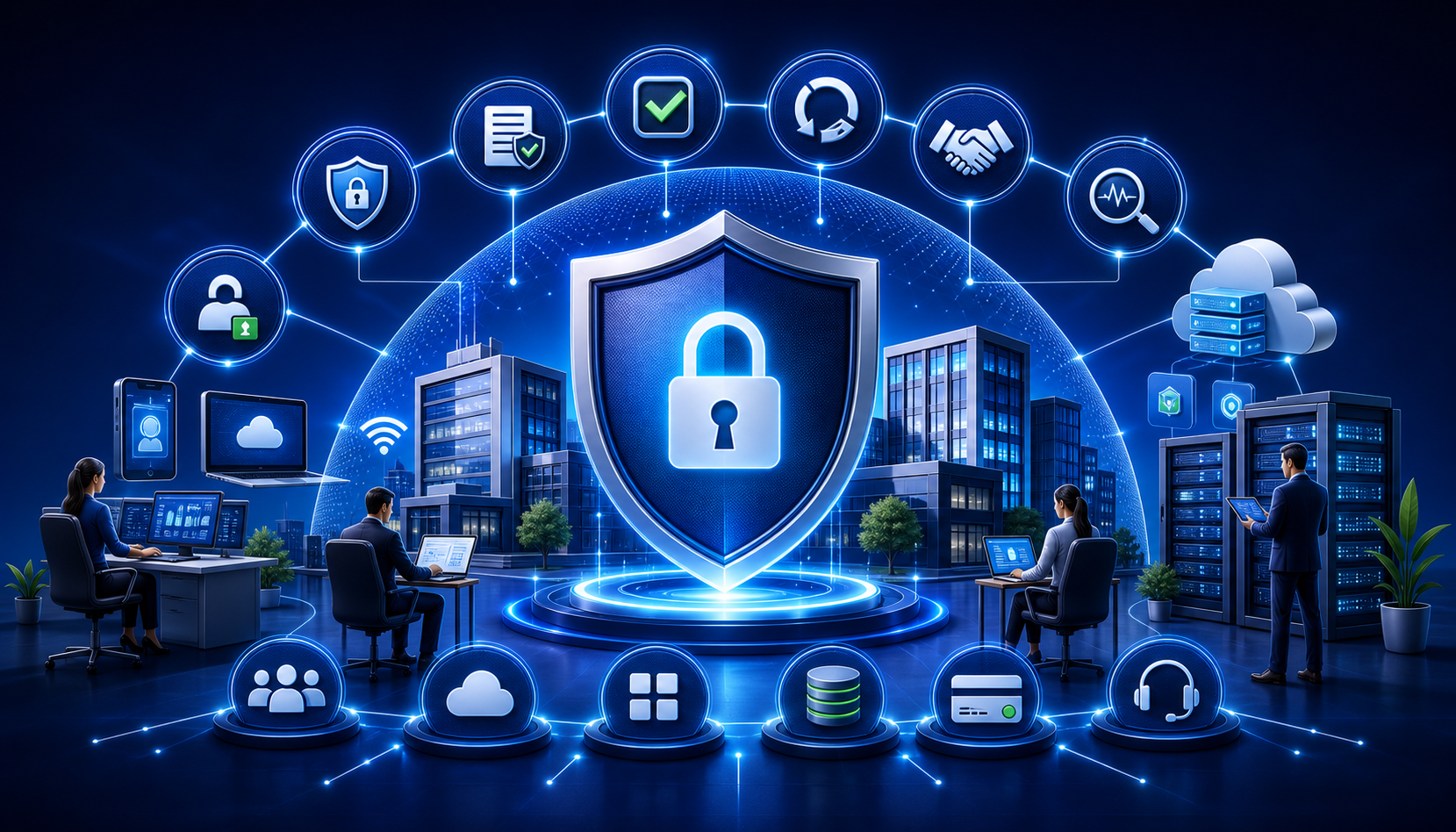
Cybersecurity refers to the technologies, processes, and best practices used to protect computers, networks, cloud environments, software, and sensitive data from cyber threats. It focuses on preventing unauthorized access, detecting malicious activities, and responding quickly to security incidents.
Modern cybersecurity is not limited to antivirus software—it includes a combination of security tools, employee awareness, continuous monitoring, and proactive risk management.
Cybersecurity helps businesses protect:
Cybersecurity uses multiple layers of protection to defend digital assets against evolving cyber threats.
| Step | Description |
|---|---|
| 1. Identify Assets | Discover critical business systems, applications, devices, and sensitive information that require protection. |
| 2. Assess Risks | Identify vulnerabilities, outdated software, weak passwords, and potential attack paths. |
| 3. Apply Security Controls | Deploy firewalls, encryption, antivirus, endpoint protection, and multi-factor authentication (MFA). |
| 4. Monitor Continuously | Use security monitoring tools to detect suspicious activities and unusual network behavior. |
| 5. Respond to Incidents | Contain attacks, investigate security events, and restore affected systems quickly. |
| 6. Improve Security | Conduct regular updates, vulnerability assessments, penetration testing, and employee training. |
This continuous cycle helps businesses reduce risks, improve resilience, and adapt to emerging cyber threats.
Businesses use different types of cybersecurity solutions to protect various parts of their IT environment.
| Cybersecurity Type | Purpose | Business Benefit |
|---|---|---|
| Network Security | Protects internal and external networks from unauthorized access. | Prevents network-based attacks. |
| Cloud Security | Secures cloud applications, storage, and infrastructure. | Protects cloud-hosted business data. |
| Application Security | Identifies and fixes software vulnerabilities. | Reduces application security risks. |
| Endpoint Security | Protects laptops, desktops, servers, and mobile devices. | Prevents malware infections. |
| Information Security | Safeguards confidential data throughout its lifecycle. | Maintains data confidentiality and integrity. |
| Email Security | Blocks phishing emails, spam, and malicious attachments. | Reduces email-based cyber threats. |
| Identity & Access Management (IAM) | Controls user authentication and permissions. | Prevents unauthorized system access. |
| Mobile Security | Protects smartphones and tablets used for business. | Secures remote work environments. |
| IoT Security | Protects connected devices and smart equipment. | Reduces vulnerabilities in connected systems. |
Cybersecurity is a business necessity because organizations store valuable customer information, financial records, and operational data digitally. A single cyberattack can lead to financial losses, legal issues, downtime, and reputational damage.
Why businesses invest in cybersecurity:
Business Value of Cybersecurity
| Benefit | Business Impact |
|---|---|
| Data Protection | Prevents unauthorized access to sensitive information. |
| Business Continuity | Reduces downtime caused by cyberattacks. |
| Customer Trust | Strengthens confidence in digital services. |
| Regulatory Compliance | Supports compliance with data protection regulations. |
| Financial Security | Reduces costs associated with breaches and recovery. |
| Brand Reputation | Protects the organization’s credibility and public image. |
Cybercriminals use various attack methods to exploit vulnerabilities in business systems. Understanding these threats is the first step toward building an effective defense.
| Cyber Threat | Description | Potential Business Impact |
|---|---|---|
| Phishing | Fraudulent emails or messages designed to steal credentials. | Account compromise and financial fraud. |
| Ransomware | Malware that encrypts business data until a ransom is paid. | Operational downtime and data loss. |
| Malware | Malicious software that damages or steals information. | System disruption and security breaches. |
| Data Breaches | Unauthorized access to confidential information. | Financial penalties and reputational damage. |
| Insider Threats | Risks caused by employees or contractors. | Data leaks and unauthorized access. |
| DDoS Attacks | Overwhelms servers with excessive traffic. | Website and application downtime. |
| Password Attacks | Attempts to crack or steal login credentials. | Unauthorized access to systems. |
| Zero-Day Exploits | Attacks targeting newly discovered software vulnerabilities. | High-risk compromise before patches are available. |
Cybersecurity is more than protecting computers—it safeguards business continuity, customer trust, financial stability, and long-term growth. Organizations that invest in cybersecurity are better prepared to prevent cyberattacks, recover quickly from incidents, and meet regulatory requirements.
Key Benefits
| Benefit | Business Value |
|---|---|
| Data Protection | Prevents unauthorized access and data theft. |
| Business Continuity | Keeps operations running during cyber incidents. |
| Regulatory Compliance | Supports GDPR, ISO 27001, PCI DSS, HIPAA, and other standards. |
| Customer Trust | Builds confidence in online services and transactions. |
| Cost Reduction | Minimizes recovery costs after security incidents. |
| Competitive Advantage | Demonstrates commitment to security and privacy. |
| Need Complete Cybersecurity Protection? Protect your business with proactive cybersecurity solutions, continuous monitoring, and expert security consulting tailored to your organization. Button Text: Talk to a Cybersecurity Expert |
|---|
Although the terms are often used interchangeably, cybersecurity and information security serve different purposes. Cybersecurity focuses on defending digital systems from cyber threats, while information security protects all forms of information, whether digital or physical.
| Feature | Cybersecurity | Information Security |
|---|---|---|
| Primary Focus | Digital assets and cyber threats | Information confidentiality, integrity, and availability |
| Protects | Networks, systems, cloud, applications | Digital and physical information |
| Threat Coverage | Malware, ransomware, phishing, hackers | Unauthorized disclosure, misuse, theft |
| Technologies | Firewalls, EDR, SIEM, MFA | Policies, governance, encryption, access control |
| Objective | Prevent cyberattacks | Protect business information |
Every industry relies on cybersecurity to protect sensitive information and maintain uninterrupted operations.
| Industry | Common Security Requirements |
|---|---|
| Banking & Financial Services | Fraud prevention, secure online banking, payment security |
| Healthcare | Patient data protection, HIPAA compliance, medical device security |
| Retail & eCommerce | Payment security, customer data protection, fraud detection |
| Manufacturing | Industrial control system security, ransomware prevention |
| Education | Student information protection, secure online learning platforms |
| Government | Citizen data security, national infrastructure protection |
| IT & SaaS | Cloud security, API protection, identity management |
| Logistics & Transportation | Fleet management security, supply chain protection |
Following cybersecurity best practices helps organizations reduce vulnerabilities and improve resilience against evolving cyber threats.
Recommended Best Practices
| Ready to Strengthen Your Business Security? Protect your digital assets with comprehensive cybersecurity services that reduce risk, improve resilience, and ensure business continuity. Button Text: Get Started Today |
|---|
A structured cybersecurity strategy helps businesses identify risks, implement controls, and continuously improve their security posture.
Cybersecurity Implementation Process
Identify critical business assets and sensitive data.
Conduct a cybersecurity risk assessment.
Implement security technologies and policies.
Train employees on cybersecurity awareness.
Monitor systems continuously for threats.
Review, update, and improve security regularly.
Organizations often adopt recognized cybersecurity frameworks to improve security governance and meet regulatory requirements.
| Framework | Purpose |
|---|---|
| ISO/IEC 27001 | Information Security Management System |
| NIST Cybersecurity Framework | Risk management and cybersecurity improvement |
| PCI DSS | Payment card security compliance |
| GDPR | Personal data protection and privacy |
| HIPAA | Healthcare information security |
| SOC 2 | Security controls for service organizations |
Cybersecurity continues to evolve as organizations adopt cloud computing, AI, and connected technologies.
Emerging Trends
Explore additional resources to strengthen your cybersecurity knowledge and improve your organization’s security posture.
Related Topics
Cybersecurity is the practice of protecting computers, networks, applications, and digital information from cyberattacks, unauthorized access, and data theft.
Small businesses are common targets for cybercriminals because they often have limited security resources. Cybersecurity helps protect sensitive data, maintain customer trust, and reduce financial risks.
Common threats include phishing, ransomware, malware, insider threats, DDoS attacks, password attacks, and data breaches.
Organizations should conduct vulnerability assessments regularly and perform penetration testing at least annually or whenever major system changes occur.
No security solution can eliminate every risk. However, a layered cybersecurity strategy significantly reduces the likelihood and impact of successful attacks.
Cybersecurity protects an organization’s entire digital ecosystem, while network security specifically focuses on protecting network infrastructure and communications.